Why School Readiness Assessment Child India Matters for Parents
Every year between January and March, millions of Indian parents ask the same anxious question: Is my child ready for school? The anxiety peaks during admission season, when parents compare their children to others and spiral into doubt about whether they have done enough. School readiness assessment at home gives you something far more useful than anxiety; it gives you a clear, actionable picture of exactly where your child stands across five developmental domains, and exactly which areas need more attention before school begins.
This is not a test you give your child. It is an observation framework you use over 1 to 2 weeks, watching your child during normal daily activities. No pressure. No performance. Just informed awareness.

The 5-Domain Home Assessment Framework
Domain 1: Language and Communication Readiness
Observe your child over several days and check which of these they can do consistently. Speaks in sentences of 5 to 6 words. Follows two-step instructions without repeating (go to your room and bring your blue bag). Tells a simple story with a beginning, middle, and end. Asks questions using who, what, where, when, and why. Can describe an object using 3 or more attributes (big, red, round ball). Knows their full name, parents' names, and approximate age. Can retell a familiar story in their own words.
If your child can do 5 or more of these, their language readiness is on track. If fewer than 3, focus on daily story time, conversation-rich activities, and vocabulary building.
Domain 2: Early Academic Readiness
Recognises and names all 26 uppercase English letters. Recognises most lowercase letters. Can write their first name (neatness varies that is fine). Identifies the beginning sound of familiar words (ball starts with buh). Counts objects up to 20 with one-to-one correspondence (touching each object while counting). Recognises written numbers 1 to 10. Understands concepts like more and less, big and small, long and short. Can identify basic shapes: circle, square, triangle, rectangle.
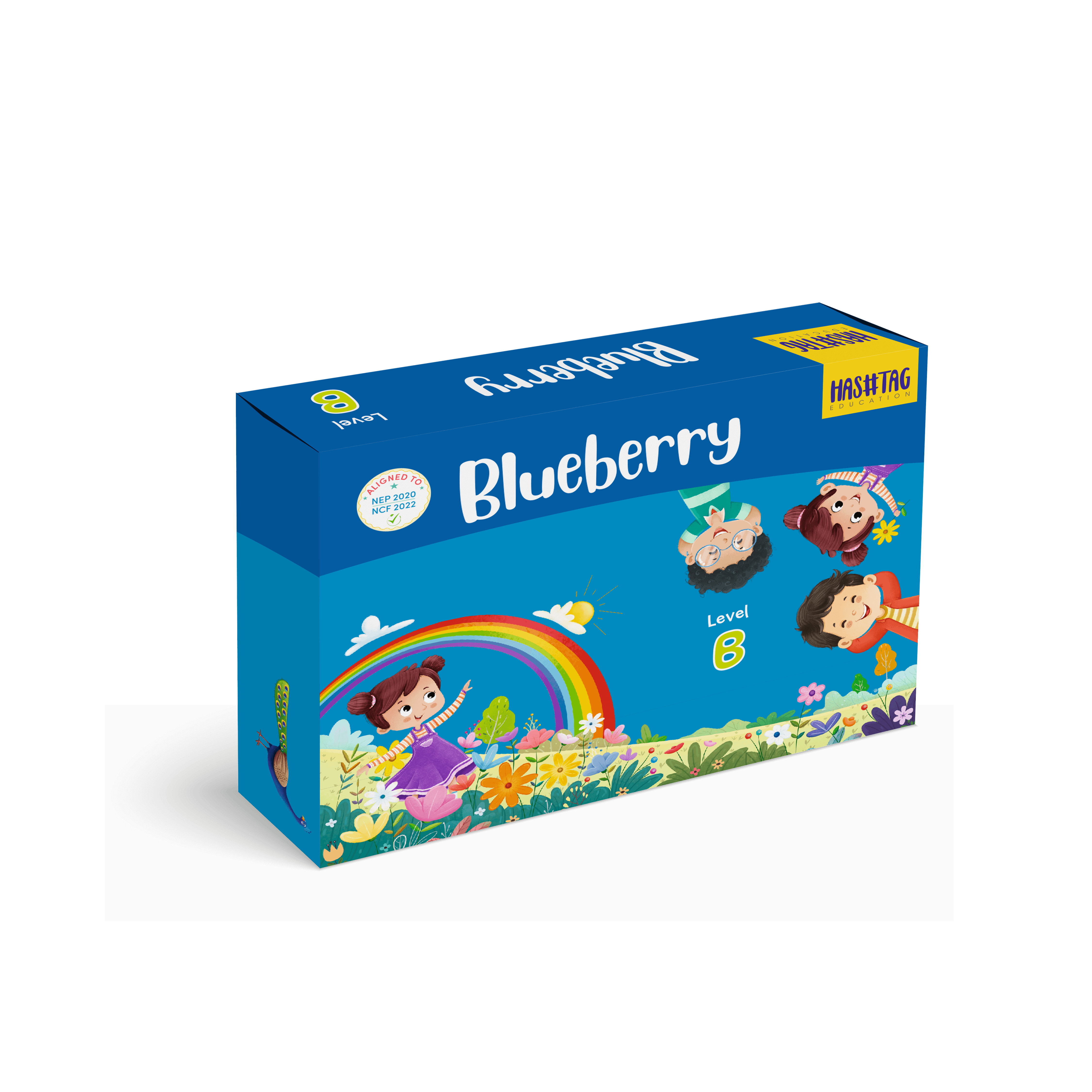
Our Blueberry Level C Box Set systematically covers every skill on this list through progressive, play-based activities. If your assessment reveals gaps, the workbooks tell you exactly which pages to focus on.
If you liked these activities and tips, explore our online courses!
Nurture curiosity, creativity, and confidence through interactive learning.
👉 https://learning.hashtageducation.in/#Go-Learn
Domain 3: Motor Skills Readiness
Holds a pencil with a near-tripod grip (thumb, index finger, middle finger). Colours within boundaries with reasonable accuracy. Traces dotted lines and shapes without significant deviation. Cuts along a straight line with child-safe scissors. Can button and unbutton medium-sized buttons. Draws a recognisable person with at least 4 body parts (head, body, arms, legs). Can copy simple shapes from a model (circle, cross, square).
Motor readiness is the domain that most surprises parents they focus on academic skills and overlook the physical foundation that all writing depends on. If your child struggles with pencil grip or cutting, invest 2 months in targeted fine motor activities before school starts. Our earlier blog post on fine motor skill development covers specific exercises.
Domain 4: Social and Emotional Readiness
Can separate from parents without prolonged distress (some upset is normal). Plays cooperatively with other children shares, takes turns, and follows group rules. Follows classroom-style instructions (sit in a circle, now we will sing). Handles mild frustration without prolonged meltdowns. Expresses needs verbally (I need to use the bathroom, I am hungry). Waits for their turn in a group setting.
Read Also: Monsoon Activities Kids India: Powerful Yet Overlooked Indoor Ideas
Many schools now assess social-emotional readiness as carefully as academic readiness. A child who can write the alphabet but cannot cooperate in a group activity is not school-ready. Our blog post on emotional intelligence covers strategies for building these skills through daily practice.
Domain 5: Self-Care Readiness
Uses the toilet independently including wiping and flushing. Washes and dries hands without help. Eats a meal with minimal assistance. Opens and closes the water bottle and tiffin box independently. Puts on and removes shoes. Manages a school bag, zipping, unzipping, finding items inside. Knows how to ask for help when needed.
Self-care readiness is the most practical domain and the most within your control. Start practising specific school routines (packing the bag, opening the tiffin box, managing the water bottle) at least 2 months before school begins.
How to Interpret Your Assessment
Add up how many items your child can do across all 5 domains. This is not a score; it is a map. Strong across all domains: Your child is ready. Focus on maintaining skills and building confidence. Strong academically but weak in motor or social skills: Shift attention to the weak domains. Motor skills respond quickly to targeted practice. Social skills need real interaction with other children. Weak academically but strong socially: Do not panic. Academic skills develop rapidly with structured practice.
Our Blueberry workbooks and premium online courses can close academic gaps within 2 to 3 months. Weak across multiple domains: Consider whether the timing is right. Some children benefit from an additional year of pre-school rather than being pushed into formal schooling before they are ready. This is not falling behind; it is giving your child the gift of readiness.
Read Also: Indoor play ideas to stimulate young children at home
What Schools Actually Assess
Most reputable Indian schools assess readiness through informal interaction, not written tests. They observe: Can the child respond to simple questions from an unfamiliar adult? Can they follow a group instruction? Can they hold a crayon and attempt to draw? Can they separate from their parents? Can they express needs verbally? These are all items on the checklist above. If your child can do these things at home, they will do them at school.