What Is Activity-Based Learning and Why Does It Work So Well for Preschoolers?
Activity-based learning is a hands-on way of teaching where kids learn by doing. The short answer is simple. A child who touches, builds, moves, and plays remembers 10 times more than one who just listens or watches. For a 2 to 6-year-old, activity-based learning is not a method. It is the natural way children learn.
📺 Prefer watching? Follow Hashtag Education on YouTube for daily preschool videos, rhymes, and social story time.
What Is Activity-Based Learning?
Activity-based learning turns a lesson into a doing moment. Instead of telling a child “red is a colour,” you give them red crayons, red fruits, and red toys to sort. The child learns red through touch, sound, and play.
The National Education Policy (NEP) 2020 places activity-based learning at the heart of the Foundational Stage (ages 3 to 8).
Top Benefits of Activity-Based Learning
Here is why activity-based learning works so well for Indian preschoolers:
- Builds memory 10 times faster
- Boosts focus and attention span
- Grows fine motor skills
- Builds confidence and independence
- Teaches teamwork and sharing
- Reduces screen dependence
- Makes learning joyful
- Supports both Hindi and English
- Helps kids ask questions
Children taught through activity-based learning become stronger thinkers, readers, and problem solvers.
If you liked these activities and tips, explore our online courses!
Nurture curiosity, creativity, and confidence through interactive learning.
👉 Start Learning Today: https://learning.hashtageducation.in/#Go-Learn
Activity-Based Learning Examples for Preschoolers at Home
Try these 10 simple activity-based learning examples using things already in your Indian home:
1. Colour Sorting
Collect red, yellow, blue toys. Ask your child to sort them into bowls.
2. Counting With Dal
Give your child 10 rajma or chana. Count aloud together while placing them in cups.
3. Letter Hunt
Say a letter sound. Ask your child to find 3 things in the room that start with that sound.
4. Shape Walk
Walk around the house pointing at circles, squares, and triangles.
5. Grocery Learning
Let your child help weigh fruits. Teach heavy vs. light.
6. Water Play Science
Fill cups with water. Teach full, half, empty.
7. Nature Collage
Pick leaves, flowers, pebbles outside. Make a collage on paper.
8. Cooking Together
Peel bananas, roll chapati, stir dal. Teach soft, hard, hot, cold.
9. Flash Card Sticking
Stick flash cards on fridge. Child picks and names one every morning.
10. Story Acting
Read a short story. Act it out together with voices and movement.
Fifteen minutes a day. Big daily learning wins.
👉 Shop now: https://link.amazon/B00xRENvO
Why Activity Based Learning Beats Screens
Screens show. Activity based learning builds. A child who watches a counting video forgets fast. A child who counts chana in a bowl remembers forever.
The American Academy of Pediatrics recommends keeping screen time under 1 hour a day for ages 3 to 5 and replacing it with hands-on play.
How to Build an Activity Based Learning Routine at Home
Simple weekday plan every Indian parent can follow:
-
Monday — Colour sorting + rhyme
-
Tuesday — Counting with dal + puzzle
-
Wednesday — Letter hunt + tracing
-
Thursday — Nature collage + story time
-
Friday — Cooking together + colour review
Keep sessions under 20 minutes. Praise every effort. Repeat weekly.
Also Read: Should Preschoolers Learn Phonics Before Alphabet?
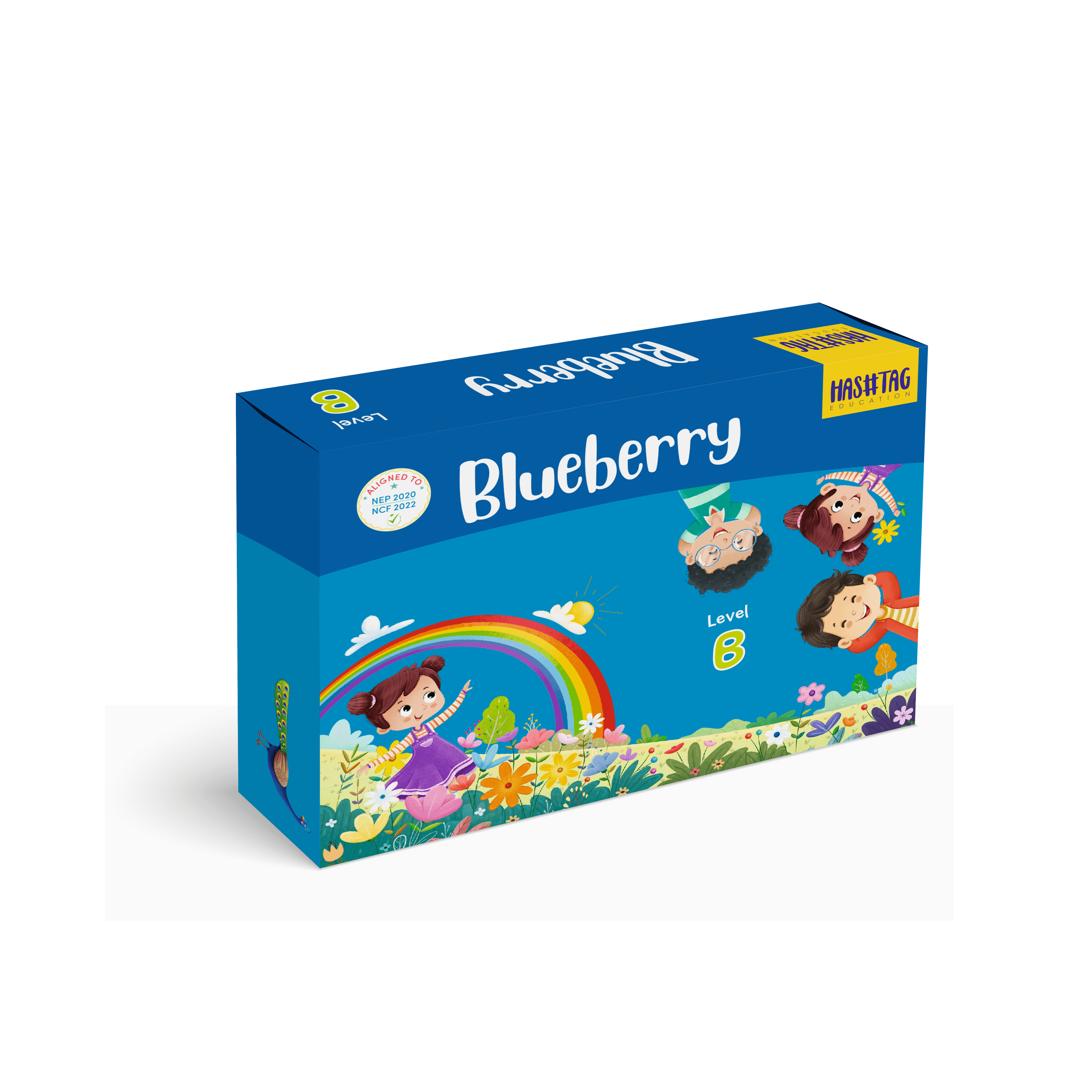
Our Hashtag Education Blueberry Series workbooks and online courses are built on activity based learning principles. NEP 2020 aligned. Bilingual Hindi + English. Screen-smart.
FAQs: Activity Based Learning
Q1. What is activity-based learning in simple words?
Activity-based learning is a way of teaching kids through doing — touching, building, moving, and playing — instead of just listening.
Q2. Why is activity-based learning important for preschoolers?
It builds memory, focus, confidence, and motor skills faster than any screen or textbook can.
Q3. What are easy activity-based learning examples at home?
Colour sorting, counting with dal, letter hunt, cooking together, nature collage, and story acting.
Q4. How long should an activity-based learning session last?
Fifteen to twenty minutes a day is perfect for a 3- to 5-year-old.
Q5. Does activity-based learning fit NEP 2020?
Yes. NEP 2020 places activity-based and play-based learning at the heart of early childhood education in India.