How to Teach Shapes and Colours for Kids the Fun Way?
Shapes and colours for kids are best taught through play, not drills. Start with 3 basic shapes (circle, square, triangle) and 3 primary colours (red, blue, yellow). Add more slowly as your child shows interest. The goal is joyful recognition, not perfect memorisation.
📺 Prefer watching? Follow Hashtag Education on YouTube for daily preschool videos, rhymes, and social story time.
Why Are Shapes and Colours Important for Kids?
Shapes and colours are the first building blocks of early maths, reading and visual thinking. When a child learns to spot a circle or point to red, they are also building:
- Visual recognition
- Vocabulary
- Sorting and classification
- Early reading readiness
- Observation skills
The National Education Policy (NEP) 2020 places these inside the Foundational Stage for ages 3 to 8.
Basic Shapes for Preschoolers: Where to Start
Begin with 3 simple shapes and grow from there:
-
Age 2 to 3 — circle, square, triangle
-
Age 3 to 4 — add rectangle, star, heart
-
Age 4 to 5 — add oval, diamond, semicircle
-
Age 5 to 6 — add pentagon, hexagon, cylinder, cube
Point out shapes in daily life. A roti is a circle. A door is a rectangle. Real world > flashcards.
👉 Shop now: Blueberry Level A nursery books (3–4 years)
Primary Colours for Kids: Where to Start
Begin with 3 primary colours and add gradually:
-
Age 2 to 3 — red, blue, yellow
-
Age 3 to 4 — add green, orange, purple
-
Age 4 to 5 — add pink, brown, black, white
-
Age 5 to 6 — shades like light blue, dark green, grey
Use the colour name every time you talk about objects. "Pass the blue cup. The red ball is under the chair."
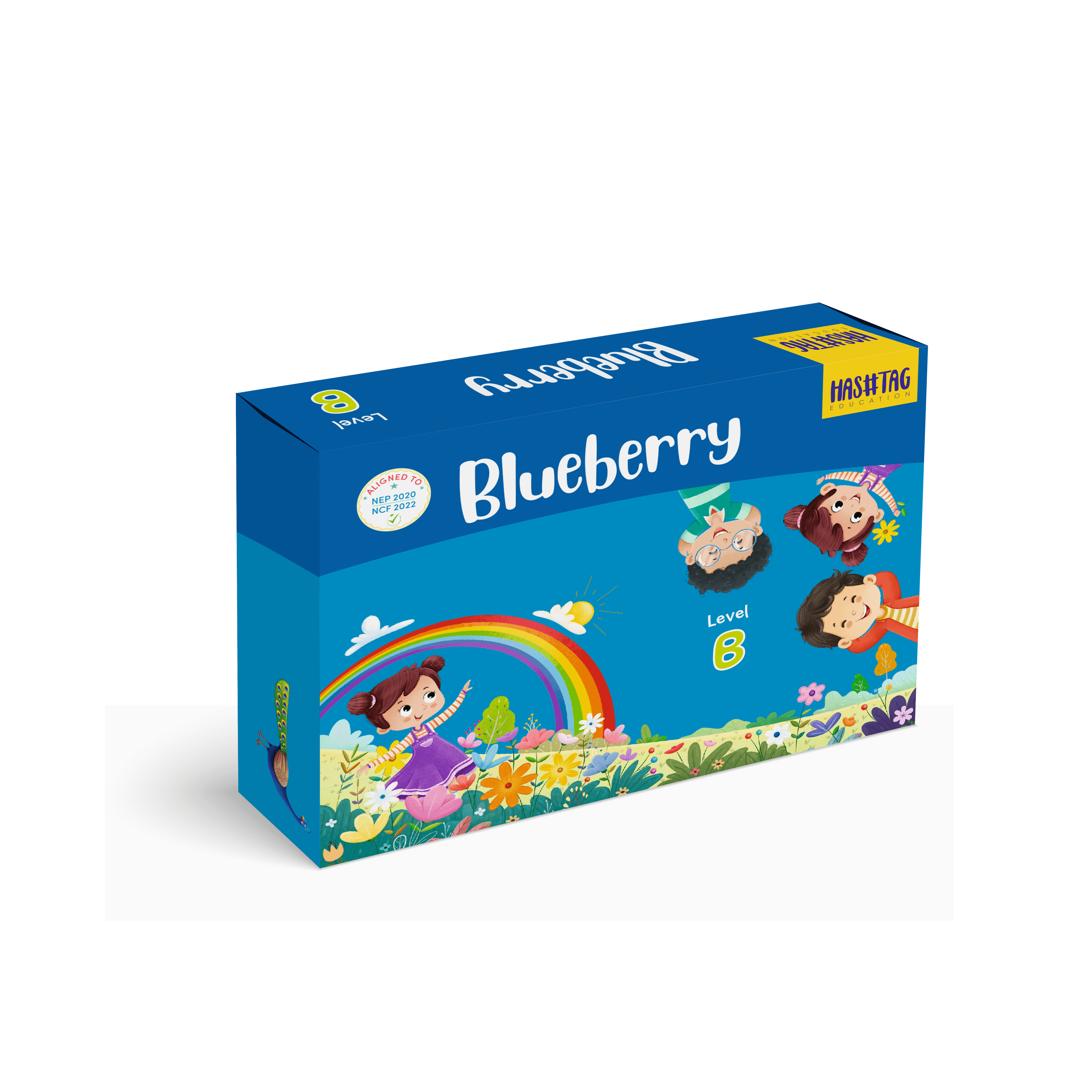
At Hashtag Education, our Blueberry Series Level B workbooks and printables are built exactly for this stage. Warm, bright, NEP 2020 aligned, and screen-smart.
Fun Shapes and Colours Activities for Preschoolers
1. Shape Hunt at Home
Walk around the house spotting shapes. "Find me 3 circles!" Fridge, clock, plate, bindi.
2. Colour Sorting Game
Give your child a bowl of mixed buttons, blocks or pom-poms. Ask them to sort by colour.
3. Rainbow Water Play
Mix colours in small cups. Let them pour red and yellow to make orange. Pure joy and science.
4. Shape Tracing
Give them a crayon and shape templates. Tracing builds pencil grip + shape memory together.
5. Draw and Colour
Draw a simple circle, square, triangle. Let your child colour each one.
6. Shape and Colour Books
Bilingual picture books with bright shapes are gold. The Hashtag Education Dino Series Colouring Book and Blueberry Series cover these beautifully.
7. Everyday Narration
"The sun is a yellow circle." "Your ball is a red sphere." Narration builds effortless learning.
If you liked these activities and tips, explore our online courses!
Help your child build strong skills with structured, expert-designed lessons.
👉 Start Learning Today: https://learning.hashtageducation.in/#Go-Learn
Colour Recognition Activities for Toddlers
Tiny ones (2 to 3 years) need very simple tasks:
- Hand them one colour at a time
- Use large colourful objects
- Sing colour songs
- Dress them in one named colour: "Red day!"
- Use food — red apple, yellow banana, green grapes
- Keep sessions under 10 minutes
Short, warm, repeated — that is the secret.
How to Teach Shapes and Colours to Kids: Simple Rules
- Start with 3, not 10
- Use real objects before flashcards
- Name the shape and colour together: "blue circle"
- Play, do not test
- Repeat daily in short bursts
- Celebrate every small win
- Keep screen time under 1 hour a day
If your child enjoys it, learning is happening.
FAQs: Shapes and Colours for Kids
Q1. At what age should kids learn shapes and colours?
Most kids begin recognising basic shapes and colours between ages 2 and 3. By age 5, they can usually name most common shapes and primary colours.
Q2. What are the basic shapes for preschoolers?
Start with circle, square and triangle. Add rectangle, star, heart, oval and diamond gradually between ages 3 and 5.
Q3. What are the first colours kids should learn?
Begin with the 3 primary colours — red, blue, yellow. Add green, orange, purple next, then expand to pink, brown, black and white.
Q4. How do I teach shapes and colours to my toddler?
Use short, playful sessions with real objects, sorting games, colouring and daily narration. Keep it under 10 minutes and repeat often.
Q5. What are good shapes and colours activities for preschoolers?
Shape hunts, colour sorting with buttons or blocks, rainbow water play, shape tracing, colouring books and everyday narration work beautifully for ages 2 to 6.